
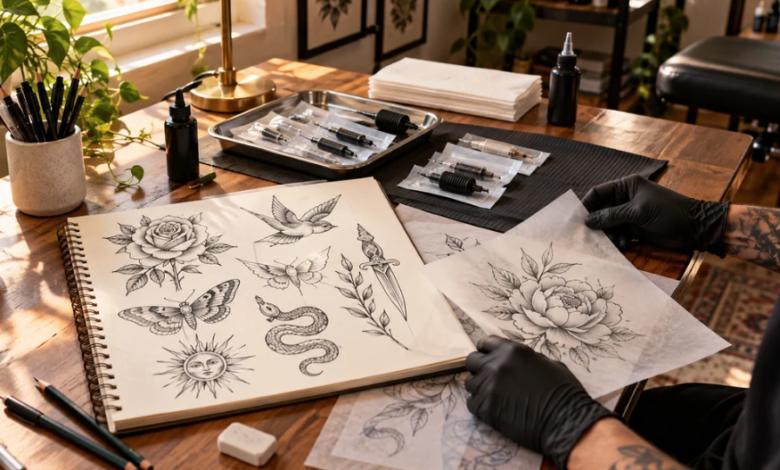
Tattooing is a creative art form that combines artistic skills, technical knowledge, and careful attention to safety. As more people become interested in learning tattoo techniques, the demand for beginner-friendly equipment continues to grow. A tattoo starter kit provides essential tools that help newcomers understand the basics of tattooing and develop their abilities through structured practice.
Choosing the right tattoo starter kit is an important first step for anyone exploring tattoo artistry. These kits often include tattoo machines, practice materials, ink supplies, and accessories designed to introduce beginners to the equipment used in professional tattoo studios.
Understanding what a kit contains, how its components work, and how to practice safely can make the learning process more organized and effective.
What Is a Tattoo Starter Kit?
A tattoo starter kit is a collection of tattooing tools and accessories packaged together for people who are beginning to learn tattoo artistry. Instead of purchasing each item separately, beginners can access several essential supplies in one package.
Most starter kits are designed to help new artists become familiar with tattoo machines, needle configurations, ink handling, and basic design techniques.
However, owning tattoo equipment does not automatically prepare someone to tattoo human skin. Proper training in hygiene, infection prevention, skin anatomy, and equipment handling is necessary before performing procedures on people.
See also: Smart Label Printing Technology Transforming Modern Workspaces
Understanding the Purpose of Beginner Tattoo Equipment
The main purpose of a tattoo starter kit is to introduce new learners to the technical and artistic aspects of tattooing.
Beginners can use these tools to understand machine operation, practice steady hand movements, experiment with different line styles, and improve their design skills on appropriate practice surfaces.
A well-organized kit can also help learners identify which tools they may need as their experience develops.
Essential Components of a Tattoo Starter Kit
Different manufacturers offer different equipment combinations. Understanding the common components helps beginners evaluate the usefulness of a particular kit.
Tattoo Machine
The tattoo machine is the primary tool used in the tattooing process. It moves a needle or needle group rapidly to deposit pigment into the skin during professional tattooing.
Two common machine categories are rotary machines and coil machines.
Rotary machines use an electric motor to move the needle mechanism. They are widely available in compact designs and are often included in beginner equipment packages.
Coil machines use electromagnetic coils to operate the needle mechanism. These machines have a traditional design and may require greater familiarity with mechanical adjustment.
Beginners should focus on understanding how their specific machine operates before attempting advanced techniques.
Tattoo Power Supply
A power supply delivers electrical energy to compatible tattoo machines. Some machines connect through cables, while others operate using rechargeable battery packs.
Certain power supplies allow users to adjust voltage according to the equipment manufacturer’s instructions.
Stable and compatible power delivery helps support consistent machine operation during practice.
Tattoo Needles and Cartridges
Tattoo needles come in different configurations for creating lines, shading, and filling larger areas.
Common categories include round liners, round shaders, and magnum configurations.
Many modern machines use disposable needle cartridges. Beginners should check machine compatibility and understand that needles and cartridges intended for skin procedures must be sterile, single-use products.
Tattoo Ink
Tattoo ink is another common component of a tattoo starter kit. Some packages include black practice ink, while others contain several colors.
It is important to distinguish between ink intended exclusively for practice surfaces and ink manufactured specifically for professional tattooing.
Practice-only ink should never be used on human skin. Even products marketed for tattooing must be evaluated for their ingredients, labeling, quality controls, and compliance with applicable regulations.
Practice Skin
Artificial practice skin is one of the most useful accessories for beginners.
These synthetic sheets provide a surface on which learners can practice linework, shapes, shading movements, and design placement without working on human skin.
Although practice skin does not behave exactly like real skin, it is a valuable educational tool for developing basic machine control.
Additional Accessories
Depending on the manufacturer, a starter kit may also contain ink caps, cartridge grips, machine covers, disposable barriers, transfer paper, and practice designs.
Not every included accessory is necessarily suitable for clinical or professional use. Beginners should review the quality, intended purpose, and compatibility of each component.
Why Tattoo Starter Kits Are Becoming Popular
Tattoo artistry has developed into a recognized creative profession with opportunities in independent studios, custom artwork, and specialized design services.
Interest in learning the craft has encouraged many beginners to explore accessible equipment packages.
Growing Interest in Creative Expression
Tattoos are often used to express personal interests, cultural influences, meaningful experiences, and artistic preferences.
This connection between personal identity and visual creativity attracts people who enjoy drawing, illustration, and design.
A tattoo starter kit allows aspiring artists to explore the tools associated with this form of expression before committing to more advanced equipment.
Accessibility of Learning Materials
Educational content about tattoo machines, design principles, and artistic techniques has become more accessible.
Beginners can study equipment terminology, observe demonstrations, and practice drawing techniques before entering formal training.
However, online educational materials should supplement rather than replace supervised instruction in hygiene and safe tattoo procedures.
Availability of Beginner Equipment
Manufacturers offer tattoo starter kits in different configurations and price ranges.
This variety allows learners to compare tools according to their intended practice activities, available resources, and long-term goals.
Key Features to Look for in a Tattoo Starter Kit
Choosing suitable equipment involves more than selecting the largest package or the lowest price.
Beginners should consider usability, reliability, safety, and the availability of replacement components.
Comfortable Machine Design
A tattoo machine should have a comfortable grip and a manageable weight.
An uncomfortable machine may make extended practice difficult, particularly when a beginner is still learning consistent hand positioning.
Balanced equipment can make it easier to concentrate on line control and artistic movements.
Reliable Equipment Compatibility
Machines, power supplies, cables, and cartridges must be compatible.
Using incompatible accessories can affect performance and potentially damage equipment.
A beginner-friendly kit should provide clear product information and straightforward setup instructions.
Useful Practice Materials
Practice skin, transfer paper, and suitable practice ink add significant educational value.
These materials help beginners study tattoo design placement and mechanical control without immediately investing in multiple separate accessories.
Clear Manufacturer Instructions
Reliable product documentation should explain equipment operation, cleaning requirements, maintenance, and technical specifications.
Clear instructions are particularly important for people who have never handled tattoo equipment before.
Safety and Hygiene Supplies
Disposable protective barriers and appropriate cleaning supplies are essential considerations.
Professional tattooing also requires infection-control procedures, sterile equipment, suitable disinfectants, safe sharps disposal, and compliance with local health requirements.
A starter kit alone rarely contains everything needed for a compliant professional tattoo setup.
Benefits of Using a Tattoo Starter Kit
A tattoo starter kit can simplify the early stages of learning by bringing several related tools into one package.
Convenient Equipment Collection
Purchasing a complete package can reduce the need to identify every accessory individually.
This is especially useful for beginners who are still learning the differences between tattoo machines, cartridges, and power systems.
Structured Practice Opportunities
Having a machine and suitable practice materials allows learners to develop a consistent routine.
They can begin with basic lines and geometric patterns before moving toward more detailed artwork on synthetic surfaces.
Familiarity With Tattoo Technology
Beginners gain practical experience in assembling compatible components, understanding machine settings, and maintaining equipment according to manufacturer guidance.
This familiarity can make later professional instruction easier to follow.
Opportunity to Explore Artistic Interests
A starter kit provides a way to discover whether the technical side of tattooing matches a learner’s creative interests.
Some people enjoy drawing tattoo concepts but prefer not to perform skin procedures. Others may decide to pursue formal training after gaining experience with practice materials.
How to Choose the Right Tattoo Starter Kit
Selecting beginner equipment requires careful comparison of the included items and their intended use.
Identify Your Learning Goals
Before buying a tattoo starter kit, consider whether the primary goal is machine familiarization, artificial-skin practice, or preparation for professional training.
A person interested in learning basic hand control may not need an extensive package containing numerous accessories.
Compare Machine Types
Rotary and coil machines have different operating mechanisms and handling characteristics.
Beginners can compare their weight, compatibility, maintenance requirements, and manufacturer support.
No single machine design is automatically suitable for every learner.
Evaluate Product Quality
Examine the manufacturer’s specifications, warranty terms, replacement-part availability, and product documentation.
A large number of accessories does not necessarily indicate a high-quality kit.
Reliable components and clear instructions are often more useful than unnecessary extras.
Consider Long-Term Usability
Some beginner machines support commonly available cartridge systems, making replacement supplies easier to obtain.
Choosing equipment with dependable manufacturer support may reduce future compatibility problems.
How to Practice With a Tattoo Starter Kit
Developing tattoo artistry requires patience, repetition, and a strong understanding of the equipment.
Beginners should separate artistic practice from procedures involving human skin.
Begin With Drawing Fundamentals
Before using a tattoo machine, practice drawing smooth lines, curves, lettering, and simple illustrations.
Basic drawing skills are essential because tattooing requires accurate design planning and controlled movements.
Practice on Artificial Skin
Synthetic practice skin provides a suitable environment for learning line consistency and design composition.
Start with simple shapes and gradually introduce more complex patterns as control improves.
Use equipment and materials specifically intended for artificial-skin practice.
Learn Equipment Maintenance
Follow the manufacturer’s instructions for machine inspection, storage, and maintenance.
Reusable equipment that may become contaminated during professional procedures requires validated cleaning and reprocessing methods appropriate to the device.
Disinfecting a surface and sterilizing a reusable instrument are not the same process.
Seek Professional Instruction
An experienced instructor can explain tattooing techniques, workplace hygiene, cross-contamination prevention, and safe equipment handling.
Formal education and supervised experience are especially important before tattooing human skin.
Tattoo Starter Kit Safety and Hygiene Considerations
Safety should be a priority throughout the learning process.
Tattooing human skin involves puncturing the skin barrier and can create risks of infection, allergic reactions, scarring, and exposure to bloodborne pathogens.
Avoid Practicing on Human Skin Without Training
A tattoo starter kit is not a substitute for professional instruction.
Beginners should not practice invasive tattoo procedures on themselves or others without appropriate training, supervision, and compliance with applicable requirements.
Artificial practice materials provide a safer starting point.
Understand Cross-Contamination
Cross-contamination occurs when microorganisms are transferred between surfaces, tools, materials, or people.
Learning proper glove use, hand hygiene, barrier protection, and workspace procedures is fundamental to professional tattoo safety.
Use Appropriate Supplies
For any future professional skin procedures, needles must be sterile and single-use, and inks must be appropriate for that purpose.
Tattoo ink should never be shared between clients through reusable ink caps or contaminated containers.
Dispose of Sharps Correctly
Used needles and other contaminated sharps require disposal in approved puncture-resistant sharps containers.
They should not be placed loosely in ordinary household waste.
Tattoo Starter Kit vs. Professional Tattoo Equipment
Beginner and professional equipment may look similar, but their intended applications and specifications can differ.
Beginner Kits
A tattoo starter kit generally focuses on accessibility and basic equipment familiarization.
It may include a relatively simple machine, practice ink, artificial skin, and introductory accessories.
The primary benefit is convenience for early learning activities.
Professional Equipment
Professional artists often select individual machines, cartridge systems, power supplies, and other tools according to their preferred techniques and work requirements.
Professional setups also require suitable infection-control infrastructure and regulatory compliance.
The distinction is not simply price. Equipment suitability, manufacturer support, hygiene, and the artist’s training are important factors.
Common Mistakes Beginners Should Avoid
Learning with a tattoo starter kit involves understanding both artistic techniques and practical limitations.
Choosing Equipment Based Only on Price
A low-cost package may appear attractive but can contain poorly documented or incompatible components.
Beginners should compare product quality and safety information rather than relying exclusively on price.
Skipping Drawing Practice
Tattoo equipment cannot replace fundamental artistic ability.
Regular drawing practice improves composition, proportion, line confidence, and design consistency.
Ignoring Hygiene Education
Even when practicing on synthetic materials, it is useful to develop organized workspace habits.
Anyone pursuing professional tattooing must receive proper infection-control training before working on human skin.
Expecting Immediate Professional Results
Tattoo artistry takes time to develop.
Consistent practice, constructive feedback, and formal education are more valuable than rushing toward complicated designs.
The Role of Tattoo Starter Kits in Artistic Development
A tattoo starter kit can serve as an introductory educational resource for aspiring tattoo artists.
Through controlled practice, learners can explore how machine movement interacts with design techniques and how different equipment configurations affect handling.
Over time, artists may discover an interest in fine-line illustrations, traditional designs, geometric patterns, lettering, or other styles.
Developing a personal artistic direction requires observation, experimentation, and continued improvement.
It is equally important to recognize that proficiency on artificial skin does not establish readiness to tattoo people. Human skin presents different technical, medical, and hygiene considerations.
Future Trends in Tattoo Starter Kit Technology
Tattoo equipment continues to evolve as manufacturers explore new designs and improve usability.
Several developments may influence beginner equipment in the coming years.
Wireless Tattoo Machines
Rechargeable battery-powered machines reduce dependence on external power cables.
Wireless designs may offer a more convenient workspace, although battery performance and equipment reliability remain important considerations.
Improved Ergonomic Designs
Manufacturers are increasingly focused on machine balance, grip comfort, and compact construction.
These improvements may make equipment handling more accessible to learners with different preferences.
Better Practice Materials
Artificial practice surfaces may continue to improve in texture, thickness, and visual feedback.
More realistic practice materials could help beginners develop machine-control skills while avoiding unnecessary procedures on human skin.
Greater Emphasis on Safety Education
As awareness of infection prevention grows, educational resources may place greater emphasis on responsible equipment use and professional hygiene standards.
This focus can support a clearer distinction between artistic experimentation and qualified professional practice.
Frequently Asked Questions About Tattoo Starter Kit
1. What Is Included in a Tattoo Starter Kit?
A typical tattoo starter kit may include a tattoo machine, compatible power supply or battery, needle cartridges, practice ink, artificial skin, and basic accessories. The exact contents depend on the manufacturer and product package.
2. Is a Tattoo Starter Kit Suitable for Complete Beginners?
Yes. Many starter kits are designed for people with no previous experience using tattoo equipment. Beginners should start with drawing exercises and artificial-skin practice while seeking appropriate professional education before tattooing people.
3. Can I Learn Tattooing at Home With a Starter Kit?
You can learn equipment terminology, practice drawing, and develop basic machine-control skills on artificial skin at home. However, performing tattoos on human skin requires more extensive training in technique, hygiene, and infection prevention.
4. What Type of Tattoo Machine Is Better for Beginners?
Many beginners explore rotary machines because of their relatively straightforward operating mechanism and compact designs. However, the most suitable equipment depends on comfort, manufacturer guidance, compatibility, and the learning environment.
5. How Long Does It Take to Learn Tattooing?
The learning period varies according to artistic experience, practice frequency, instruction quality, and individual progress. Developing professional competence generally requires substantial supervised practice and education rather than a fixed number of days or weeks.
6. Do Tattoo Starter Kits Include Everything Needed for Professional Tattooing?
No. Most beginner kits do not provide the complete equipment, infection-control facilities, training, and regulatory requirements necessary for professional tattoo services. Additional supplies and professional preparation are usually required.
Conclusion
A tattoo starter kit provides an accessible introduction to tattoo equipment, artistic practice, and the technical aspects of tattooing. By combining essential tools and beginner-friendly materials, these packages can help aspiring artists explore their interests and develop basic machine-control skills.
Choosing reliable equipment, understanding its components, and practicing on artificial surfaces are important parts of the learning process. Equally important are hygiene education, professional instruction, and awareness of the risks associated with tattooing human skin.
With patience, consistent artistic development, and responsible training, a tattoo starter kit can become a useful foundation for exploring the creative and technical world of tattoo artistry.


