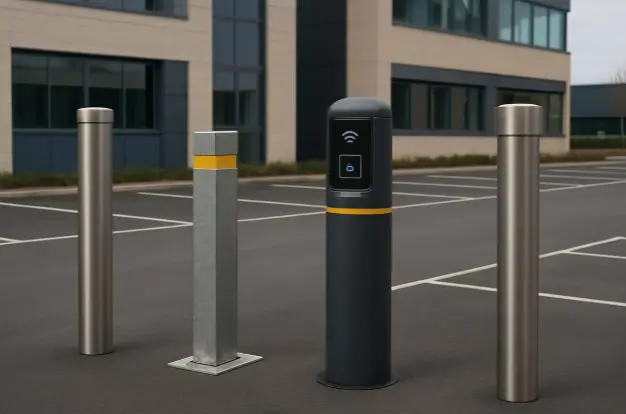
Parking bollards play a crucial role in managing vehicle access and enhancing the safety of parking areas. These sturdy posts are widely used in commercial, residential, and public spaces to control traffic flow, protect pedestrians, and prevent unauthorised vehicle entry. Understanding the different types, installation processes, and benefits of parking bollards enables property owners and facility managers to make informed decisions when looking to improve their site’s security and organisation.
What Are Parking Bollards?
Parking bollards are short, vertical posts typically installed on pavements, in car parks, or along roadways. They act as physical barriers to prevent vehicles from entering restricted areas or colliding with property or pedestrians. Constructed from materials such as steel, concrete, or plastic, these bollards can be fixed or removable, depending on the specific security requirements. Their visibility and strength make them ideal for protecting key areas from accidental or deliberate vehicle damage.
Types of Parking Bollards
There are several types of bollards designed to fulfil different protection and access control needs. Fixed bollards provide a permanent barrier and are usually made of steel or concrete. Removable bollards offer flexibility, allowing temporary access when required, while retractable bollards can be lowered into the ground, offering seamless entry when not in use. Additionally, flexible bollards made from plastic or rubber bend upon impact to reduce damage to vehicles or themselves.
Fixed Bollards
Fixed parking bollards are embedded into the ground or mounted on surfaces to provide robust and permanent protection. These are ideal for high-security areas where preventing vehicle access is critical. Their durability withstands significant impacts, making them a reliable choice for areas with heavy traffic or potential threats.
Removable and Retractable Bollards
For locations requiring controlled access, removable and retractable bollards offer convenience and flexibility. They can be unlocked and removed or lowered to allow authorised vehicles to pass through, then reinstated to maintain security. This adaptability is especially useful in commercial properties or shared spaces that need regulated entry.
Flexible Bollards
Flexible bollards are typically used to guide traffic or delineate pedestrian areas. Constructed from impact-resistant materials, they bend when struck and return to their original position, thereby reducing damage and maintenance costs. While they offer less physical protection compared to fixed bollards, their visibility and flexibility enhance traffic management in parking zones.
Benefits of Installing Parking Bollards
The primary advantage of parking bollards is their ability to enhance safety by providing physical barriers. They protect buildings, infrastructure, and pedestrians from accidental collisions or intentional vehicle attacks. By clearly defining parking spaces and traffic routes, bollards also improve the efficiency and organisation of parking areas, minimising confusion and potential hazards.
Moreover, bollards contribute to property protection by preventing unauthorised parking or access in sensitive zones. For example, bollards installed near pedestrian walkways, cycle paths, or entryways can stop vehicles from entering areas where they might cause damage or injury.
Materials Used in Parking Bollards
The choice of material significantly affects the bollard’s durability, aesthetic appeal, and function. Steel bollards are known for their toughness and are often powder-coated to resist corrosion and match the environment’s design. Concrete bollards offer substantial mass and impact resistance, frequently used in high-risk areas. Plastic and rubber options provide a budget-friendly solution for light-duty applications, mainly used for guidance rather than security.
Installation Considerations for Parking Bollards
Proper installation is vital to ensure the bollards perform effectively. Consideration should be given to the bollard’s height, spacing, and precise location to maximise both vehicle control and pedestrian safety. Typically, bollards are spaced to prevent vehicles from passing through, but wide enough to maintain pedestrian flow.
Installation methods vary depending on the type of bollard. Fixed bollards generally require concrete footings or core drilling into pavement. Removable bollards come with locking sockets embedded in the ground for secure placement, while retractable bollards need more extensive groundwork to accommodate their mechanisms.
Compliance and Regulations
Depending on the country or municipality, specific regulations may govern the use and placement of parking bollards. Compliance with accessibility standards, such as the Equality Act in the UK, is essential to ensure bollards do not obstruct wheelchair access or create hazards for visually impaired individuals. Additionally, visibility features like reflective strips or lighting may be mandated to reduce accident risks, especially during night-time.
Maintenance and Longevity
Regular maintenance extends the lifespan of parking bollards and preserves their effectiveness. Steel bollards require inspections for rust or damage, with repainting as necessary to maintain corrosion resistance. Flexible bollards might need replacements more frequently due to their impact and bending. Keeping bollards clean and visible also contributes to ongoing safety.
See also: Planning for Growth in Industrial Businesses
Applications of Parking Bollards
These protective posts are utilised across various sectors. Retail centres, office parks, and residential complexes use parking bollards to delineate parking bays and protect pedestrian zones. Municipalities install them to control traffic flow, safeguard public spaces, and prevent illegal parking. Industrial sites benefit from bollards by restricting access to sensitive or hazardous areas.
They also prove critical in security applications. In sensitive locations such as government buildings, airports, and event venues, bollards provide a vital line of defence against vehicle-based threats, complementing other security measures.
The Role of Parking Bollards in Urban Planning
Urban planners incorporate bollards as an integral part of cityscape design to enhance safety while maintaining aesthetic appeal. Modern bollards come in various styles, colours, and finishes, allowing them to blend seamlessly with historic or contemporary surroundings. Beyond functionality, well-designed bollards can positively contribute to the streetscape by guiding foot and vehicle traffic effectively.
Technology Integration with Parking Bollards
Advancements in technology have introduced smart bollards that can be controlled remotely or integrated with security systems. Automated retractable bollards, for instance, offer enhanced access management by using sensors, keypads, or remote controls. This integration facilitates efficient control while maintaining high security in dynamic environments.
Choosing the Right Parking Bollards
Selecting suitable parking bollards requires assessing several factors such as the level of protection needed, environmental conditions, budget constraints, and aesthetic preferences. Consulting experts or suppliers specialising in security and parking management can provide valuable guidance. For detailed information and product options, resources such as parking bollards suppliers offer extensive selection and advice tailored to various applications.
Conclusion
Parking bollards represent a cost-effective and practical solution for enhancing protection across a variety of environments. Their ability to control vehicle movement, protect property and pedestrians, and contribute to orderly parking makes them indispensable in both public and private spaces. By understanding the types, benefits, and installation requirements of parking bollards, stakeholders can improve site safety and functionality effectively.
As urban areas continue to grow and evolve, the importance of well-implemented parking bollards in securing spaces and managing traffic will remain a critical aspect of infrastructure planning and safety management.