Businesses today are looking for reliable ways to manage electricity consumption, reduce operating expenses, and maintain power during unexpected outages. Solar energy combined with battery storage offers a practical approach to these challenges. A 50kw inverter can play an important role in this setup by converting solar electricity into usable AC power while coordinating energy flow between solar panels, batteries, and the utility grid.
Why Commercial Buildings Need Hybrid Solar Systems
Commercial facilities often operate multiple electrical systems throughout the day. Manufacturing equipment, lighting, air conditioning, computers, refrigeration, and other machinery can create substantial electricity demand.
Traditional grid dependence can expose businesses to rising electricity costs and supply interruptions. Solar energy systems help address these concerns by generating electricity on-site. When battery storage is included, excess solar energy can be stored and used later, depending on system configuration.
Hybrid technology gives businesses more flexibility because it can coordinate different energy sources instead of relying exclusively on solar generation or grid electricity.
Understanding 50kW Hybrid Inverter Technology
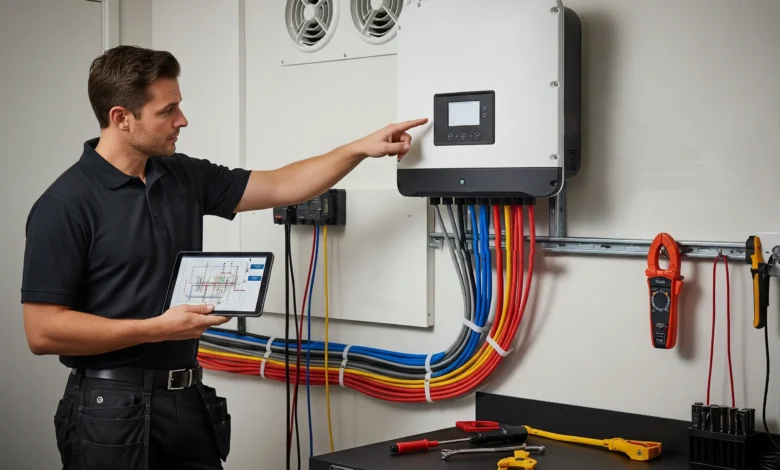
A hybrid inverter manages the conversion and distribution of electrical power within a solar energy system. It converts direct current (DC) generated by solar panels into alternating current (AC) for commercial equipment and compatible electrical loads.
It can also manage battery charging and discharging, allowing stored electricity to support operations when solar production decreases or grid conditions change.
Felicity Solar’s 50kW hybrid energy storage solution combines a high-power inverter with high-voltage lithium iron phosphate (LFP) battery options. The system is designed for residential, commercial, industrial, and off-grid applications, depending on the selected configuration.
Advantages of High-Voltage LFP Battery Storage
Battery technology is an important part of a hybrid solar installation. Lithium iron phosphate batteries are widely used in energy storage because of their thermal stability, cycle-life characteristics, and suitability for repeated charging and discharging.
A high-voltage battery configuration can support efficient integration with compatible hybrid inverters. It also provides flexibility when designing storage capacity around a facility’s daily energy requirements.
The Felicity Solar system supports expandable battery configurations. Its published solution information describes up to 16 battery packs in series per cluster and multiple clusters in parallel, allowing larger storage configurations when supported by the selected equipment.
Actual usable capacity depends on the battery model, configuration, operating limits, and installation design.
Intelligent Energy Management for Better Efficiency
A major advantage of hybrid solar technology is the ability to manage electricity according to operating schedules.
Time-of-use functionality allows users to configure charging and discharging periods around electricity tariffs. For example, a business may charge its batteries during periods of strong solar production or lower electricity rates and use stored energy during more expensive periods.
Real-time monitoring also helps facility managers understand energy production, battery status, electricity consumption, and system alerts. Felicity Solar’s FSOLAR monitoring platform provides access to system information and historical data through its monitoring application.
These features can help businesses make more informed energy-management decisions.
Where Can a 50kW Solar Energy System Be Used?
A 50kW hybrid installation can serve a variety of facilities when its capacity matches their electrical requirements.
Factories and Workshops: Solar generation and battery storage can support suitable production equipment, lighting, and other operational loads.
Hotels and Hospitality Facilities: The system can help manage electricity requirements for lighting, selected air-conditioning loads, and essential services.
Hospitals and Healthcare Buildings: Properly designed backup arrangements can support selected critical electrical equipment and facility services.
Warehouses and Supermarkets: Refrigeration, lighting, security systems, and other electrical loads can benefit from an appropriately configured solar energy solution.
Off-Grid Locations: Hybrid systems can provide an alternative electricity source in locations where grid access is limited or unavailable.
Important Factors Before Installation
Selecting a commercial solar system requires more than comparing inverter power ratings. Businesses should review their peak demand, daily electricity consumption, solar panel capacity, battery storage needs, and backup requirements.
Electrical compatibility, grid regulations, installation space, ventilation, protection systems, and professional commissioning should also be considered. A qualified solar engineer can evaluate these factors and recommend a configuration that meets the facility’s actual requirements.
Conclusion
Hybrid solar technology offers businesses greater flexibility in generating, storing, and managing electricity. By combining solar panels, a compatible inverter, and high-voltage LFP battery storage, a 50kW system can support different commercial and industrial energy requirements. Careful system sizing and professional installation are essential for achieving dependable operation and long-term value.