It’s always the same story.
Someone sends a message to the team chat:
“Where did the equipment go?”
Five minutes pass. Nothing.
Someone else replies: “Just saw this.” Another person asks, “Which equipment?” Meanwhile the delivery truck is waiting, the schedule is slipping, and half the team doesn’t even realize there’s a problem.
Sound familiar?
Now imagine the same situation with two-way radios.
A button gets pressed.
“Team, where’s the lighting gear?”
Instant reply:
“Loading dock. Bringing it now.”
Problem solved in ten seconds.
That tiny difference—instant voice communication versus delayed digital messages—is exactly why radios still outperform many modern tools when teams need to move fast.
Speed: The One Thing Apps Can’t Beat
Phones are powerful. Messaging apps are convenient.
But they’re slow.
Unlock the screen.
Find the right chat.
Type the message.
Wait for someone to read it.
Hope notifications aren’t muted.
With two-way radios, communication skips all of that.
Press the button.
Speak the message.
Everyone on the channel hears it immediately.
No typing. No waiting. No wondering if someone saw the message buried under twenty notifications.
When timing matters—like during events, construction projects, or logistics operations—that speed becomes a huge advantage.
Because coordination works best when information travels quickly.
Group Communication That Actually Works
Group chats try to simulate team communication.
But let’s be honest—they’re messy.
Messages arrive at different times. Important updates get buried between side conversations. Someone inevitably misses the key message because they muted the chat.
Radios work differently.
With two-way radios, when someone speaks, everyone listening hears the message at the exact same moment.
No scrolling.
No searching.
No confusion.
This real-time communication keeps teams aligned, especially when multiple tasks are happening simultaneously.
One voice. One message. Everyone informed.
Simple… and surprisingly powerful.
See also: How Smart Technology Is Redefining Modern Travel Experiences
Clearer Communication, Fewer Mistakes
Text messages can be misread. Short instructions can become confusing.
Ever received a message like:
“Move the equipment near the gate.”
Which gate?
A two-way radio eliminates that ambiguity. Voice communication adds tone, context, and immediate feedback.
Someone speaks:
“Move the equipment to Gate Three.”
Reply comes instantly:
“Copy. Gate Three.”
Clear message. Clear confirmation.
And that clarity prevents the kind of small mistakes that can turn into big delays.
Reliable When Networks Struggle
Now let’s talk about crowded networks.
Large events, festivals, and busy worksites often overwhelm cellular service. Messages fail to send. Calls drop. Data slows to a crawl.
Phones struggle.
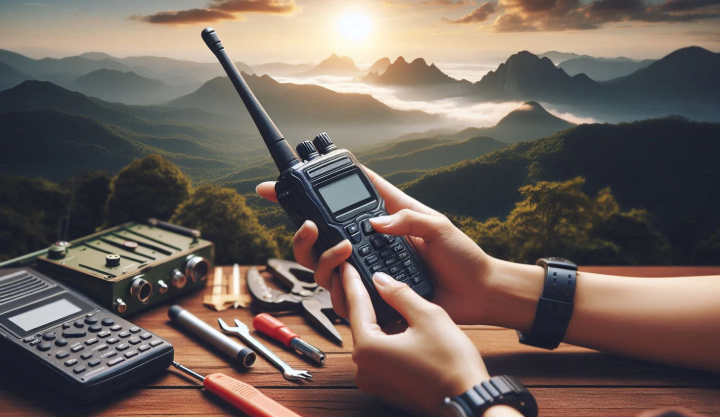
Two-way radios are designed to handle these situations much better. Traditional radios communicate directly through radio frequencies, while newer push-to-talk systems expand communication coverage using modern network infrastructure.
The result?
Reliable communication—even when mobile networks are overloaded.
It’s the same push-to-talk idea—just upgraded for wider communication.
Faster Response in Unexpected Situations
Communication delays aren’t just inconvenient.
Sometimes they’re risky.
Construction sites, warehouses, and large public venues rely on quick updates to prevent hazards and manage unexpected situations. If someone spots a problem, they need to alert the team immediately.
That’s where two-way radios shine.
Press the button.
Report the issue.
Multiple people hear the message instantly.
No searching for phone numbers. No waiting for replies.
Just fast coordination.
And in safety-critical environments, fast communication can make a real difference.
Final Thoughts: When Simplicity Wins
Modern technology offers countless communication tools.
Messaging apps. Collaboration platforms. Video calls. Notifications for everything imaginable.
Yet in many environments, teams still rely on two-way radios.
Why?
Because push-to-talk communication removes friction.
No typing.
No waiting.
No missed messages.
Just one button, one voice, and everyone hearing the same information at the same time.
And sometimes, the simplest solution is still the most effective one.