Immersive experiences depend on one important idea: movement has to feel believable. Whether someone is training in a flight simulator, enjoying a motion ride, exploring a virtual world, or watching a flying theater film, the body quickly notices when movement does not match what the eyes see.
This is where 6DOF becomes important.
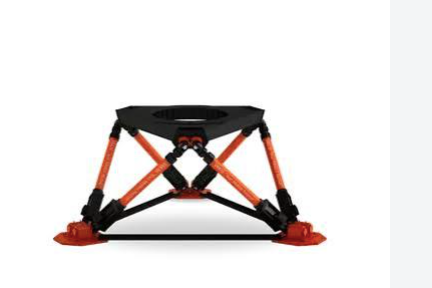
6DOF stands for six degrees of freedom. It refers to movement across six axes: three rotational motions and three translational motions. Together, these movements allow a motion platform, simulator, or virtual environment to create more realistic spatial experiences.
For entertainment venues, training centers, VR developers, and simulation providers, 6DOF is one of the key technologies that helps transform visual content into a physical experience.
What Is 6DOF?
6DOF describes the ability of an object or system to move in six different ways within three-dimensional space.
The six movements are usually divided into two categories: rotational movement and translational movement.
Rotational movement includes pitch, yaw, and roll. Pitch refers to tilting forward and backward. Yaw refers to turning left and right. Roll refers to leaning side to side.
Translational movement includes surge, sway, and heave. Surge refers to forward and backward movement. Sway refers to side-to-side movement. Heave refers to upward and downward movement.
When these six motions work together, a simulator can create a much more complete movement experience. Instead of only tilting or rotating, the system can also shift position in space.
This is why 6DOF is often used in flight simulation, racing simulation, virtual reality, motion theaters, and high-end training environments.
Why 6DOF Feels More Realistic
The real world does not move in only one direction.
When a plane takes off, the body may feel acceleration, lift, vibration, and angle change at the same time. When a vehicle turns sharply, the rider may feel lateral movement, tilt, and forward force. When a boat moves through waves, the motion may include rise, fall, sway, and roll.
A system with limited motion can suggest these feelings, but a 6DOF platform can reproduce them more convincingly.
This matters because the brain compares visual information with physical sensation. If the screen shows a rapid dive but the body feels no drop or tilt, the illusion becomes weaker. If the motion platform moves in a way that matches the image, the experience feels more believable.
In simulation, realism is not only about high-resolution graphics. It is also about synchronized physical feedback.
The Six Axes of 6DOF Explained
Pitch
Pitch is the motion of tilting forward or backward.
In a flight simulator, pitch can help create the feeling of climbing, descending, diving, or pulling upward. In a motion theater, it can make a flying scene feel more dramatic.
Yaw
Yaw is the motion of turning left or right.
This movement helps simulate steering, direction changes, and curved motion paths. It is useful in driving, flying, racing, and navigation-based experiences.
Roll
Roll is the motion of leaning side to side.
Roll is especially important in flight and sea-based simulations. It can make banking turns, waves, or unstable environments feel more realistic.
Surge
Surge is forward and backward movement.
It can simulate acceleration, braking, impact, or sudden speed changes. In racing simulators and flying theaters, surge helps create the physical sense of momentum.
Sway
Sway is side-to-side movement.
It can reproduce lateral forces, sharp turns, drifting, or side movement in a virtual environment. This makes the experience feel less flat and more dynamic.
Heave
Heave is upward and downward movement.
It can simulate lift, drops, turbulence, bumps, waves, and altitude changes. For flying theaters and flight simulators, heave is one of the most important movements for creating the sensation of height and motion.
6DOF vs. 3DOF: What Is the Difference?
The difference between 3DOF and 6DOF is the range of movement.
A 3DOF system usually focuses on three types of movement. Depending on the platform, this may include pitch, roll, and heave, or another combination of limited axes. This can still create engaging motion, especially for basic simulation or compact entertainment systems.
However, 3DOF does not provide the full spatial movement of 6DOF.
A 6DOF system combines pitch, yaw, roll, surge, sway, and heave. This gives the platform more freedom to simulate complex real-world motion.
For simple attractions, 3DOF may be enough. For high-fidelity simulation, flight training, immersive rides, and advanced VR environments, 6DOF can deliver a more complete and realistic experience.
Where 6DOF Is Used
Flight Simulation
Flight simulation is one of the most common uses of 6DOF.
Pilots need to experience takeoff, landing, turbulence, turning, climbing, descending, and emergency maneuvers in a controlled environment. A 6DOF platform can reproduce these movements more accurately than a limited-motion system.
This makes training more realistic and helps users develop better spatial awareness.
Racing Simulation
In racing simulation, 6DOF can reproduce acceleration, braking, cornering, road texture, and impact forces.
A racing simulator that only tilts may feel entertaining, but a 6DOF simulator can create a stronger connection between the driver’s actions and the vehicle’s response.
This is useful for both entertainment and professional driver training.
Virtual Reality
VR becomes more convincing when physical movement matches the virtual environment.
A 6DOF system can help users feel movement through space, not just see it through a headset. When used carefully, motion platforms can make VR rides, training applications, and interactive simulations feel more natural.
Flying Theaters and Motion Rides
Flying theaters and motion rides use 6DOF to make audiences feel like they are gliding, diving, turning, and floating through large-scale visual environments.
When motion, visuals, sound, and environmental effects are synchronized, the attraction becomes more memorable and emotionally engaging.
Why Synchronization Matters in 6DOF Systems
A 6DOF system is only effective when movement is synchronized with the content.
If the platform moves too early, too late, or too strongly, the audience may feel disconnected or uncomfortable. Good synchronization makes motion feel natural, while poor synchronization can break immersion.
This is especially important in entertainment. Guests should feel excitement, not confusion. The motion should support the story and visual content.
In training, synchronization is even more important because the experience must support accurate learning. If motion feedback does not match the simulated environment, users may develop incorrect expectations.
Choosing the Right 6DOF System
Not every venue or application needs the same system.
A theme park may need a high-capacity flying theater. A VR arcade may need compact motion platforms. A training center may need precision, durability, and accurate simulation software. A museum may need a safe, accessible experience for a wide range of visitors.
Before investing in 6DOF technology, operators should consider:
- Audience type
- Space requirements
- Motion intensity
- Content format
- Safety standards
- Maintenance needs
- Capacity goals
- Integration with visuals and sound
- Long-term operating costs
The best system is not always the most intense. It is the one that matches the purpose of the experience.
Conclusion
6DOF is one of the most important technologies behind realistic motion simulation. By combining pitch, yaw, roll, surge, sway, and heave, it allows platforms to reproduce complex movement in three-dimensional space.
This makes 6DOF valuable for flight simulation, racing simulation, VR, motion theaters, flying attractions, and interactive training environments.
For operators and developers, the value of 6DOF comes from more than movement alone. It comes from accurate synchronization, strong content, safe system design, and a clear understanding of the user experience.